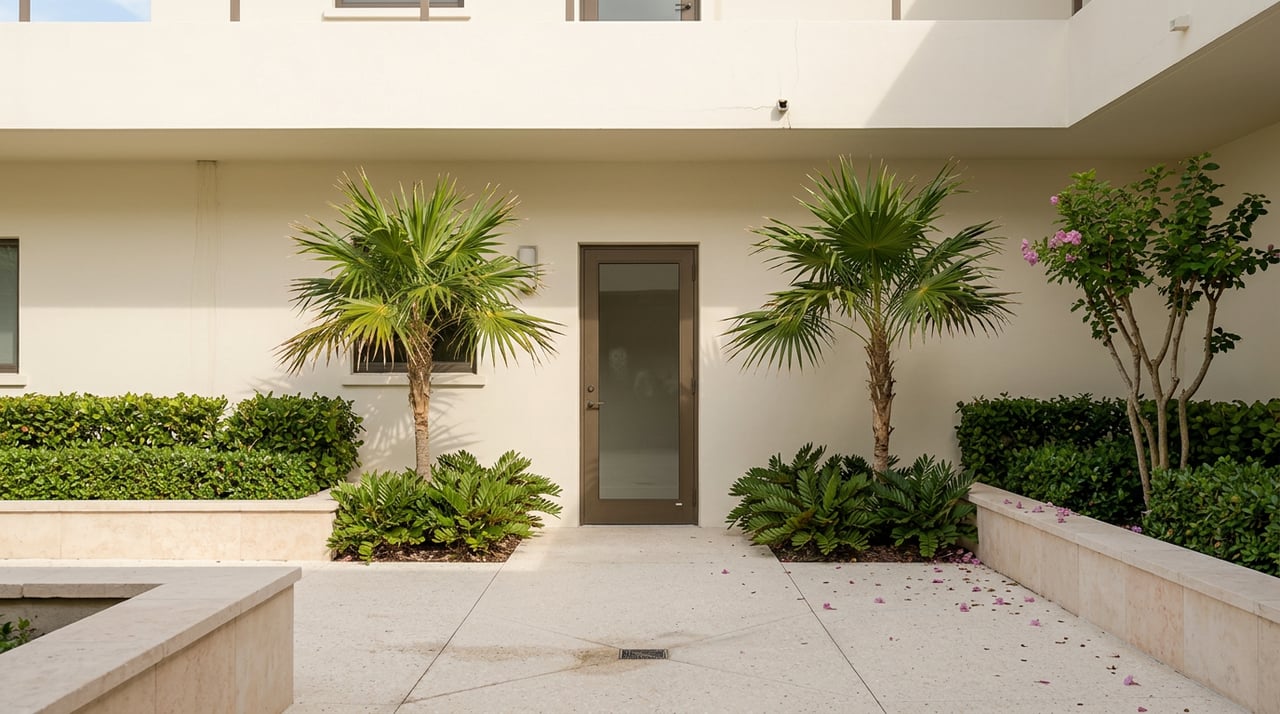
Saturday morning on Normandy Isle still starts the way it always has: coffee in hand, walking toward Normandy Isle Fountain at 7892 Rue Vendome, where the weekend market has spread its folding tables under the same trees for years. There's produce, cut flowers, honey, French pastries, the kind of small vendor list that rewards regulars more than tourists. By early afternoon the market packs up, and for a long time, that was the ceiling on a North Beach Saturday. The morning had a rhythm. The night did not. If you wanted a real dinner out, you drove south.
That pattern finally broke, and it broke in a way you can date. North Beach's evening options caught up to the people who already live here. The neighborhood has carried a strong residential base for decades without a dining scene to match it, which meant locals ate well but usually somewhere else. That gap is closing fast enough that it's worth mapping block by block, because the shift didn't happen through hype. It happened through a handful of specific openings that finally gave the neighborhood a reason to stay put after dark.
A Saturday You Don't Have to Plan
Part of what makes North Beach livable on a week-to-week basis is that its best fixtures don't require checking an events calendar. They recur on a schedule you can memorize once and never think about again. The Miami Beach Bandshell, the open-air venue that anchors the neighborhood's north end, runs its own version of a weekly habit:
- Farmers market, Saturdays, at Normandy Isle Fountain, 7892 Rue Vendome
- Food Truck Music Fest, every fourth Thursday at the Bandshell
- Dance Band Night, every second Thursday at the Bandshell
- Opera in the Park, four times a year, a partnership between the Bandshell, Florida Grand Opera, and Magic City Opera
None of these are one-off pop-ups chasing a season. They're built to repeat, which is a different proposition than most of Miami's programming, where the calendar changes every week and staying current means constant scrolling. Here, you set the pattern once. The venue's own concert schedule fills in around those fixed points with touring acts, but the backbone of the neighborhood's social life doesn't depend on who's passing through.
The Park That Finally Matches the Beach
The other piece of that backbone is North Beach Oceanside Park at 8328 Collins Avenue. A $15.8 million renovation added a net increase of 188 trees to the park and the adjoining stretch of the Beachwalk, along with new concrete pathways. It's the kind of capital project that doesn't generate headlines outside the neighborhood, but it changes how a Saturday actually unfolds. A walk that used to dead-end at a strip of sun-bleached grass now has real shade cover for the length of it, which matters more in a Miami August than almost any other single amenity.
The Bandshell itself sits inside the North Shore Historic District, a stretch of Collins Avenue that earned National Register of Historic Places designation in 2009 for its concentration of MiMo architecture. The Bandshell building dates to 1961, designed by Norman Giller and Associates, and it's been run by the nonprofit Rhythm Foundation since 2015. That history matters for a simple reason: none of this was purpose-built as a lifestyle amenity for new residents. It was already there, doing exactly what it does now, decades before any of the current construction started.
The Corner That Used to Send You South
The newest piece of the puzzle is dinner. Ezio's, an Italian-inspired steak and seafood house from Brandon Hoy and Carlo Mirarchi, the team behind Brooklyn's Roberta's, debuted in late fall 2025 at 72 Park, the 22-story tower at 580 72nd Street, its first permanent home after a limited pop-up run at the original Roberta's in Bushwick. The restaurant occupies 2,200 square feet at the building's northwest corner, part of roughly 10,000 square feet of ground-floor retail built into the tower. It's the kind of menu that signals real commitment to a neighborhood rather than a seasonal test run:
A custom dry-aging program built around a 30-Day Dry-Aged Lamb Saddle and a 90-Day Dry-Aged Rib Steak for Two, a raw bar of locally sourced seafood, a Whole-Roasted John Dory, and Charbroiled Veal Sweetbreads, backed by a wine list running more than 110 labels.
That's not a menu designed to catch overflow foot traffic from somewhere else. It's designed for people who live within walking distance and want somewhere worth dressing up for on a Friday.
Ezio's isn't operating alone. Down toward Ocean Terrace Park, Sushi Bichi built its entrance around a ceremonial Japanese torii gate, with executive chef Byron Alabado and executive sushi chef Shoyo Iida running a menu that pulls from Japan, the Philippines, Mexico, Peru, Brazil, and the West Indies, all served a short walk from the sand. Fifi's Seafood, long known to locals for its stone crab and hog snapper caught by local divers, expanded into the storefront next door and more than doubled its seating after word spread beyond the neighborhood. Katana, the sushi-boat spot that Miamians still call a hidden gem despite the line out the door, got busy enough to open a second location on Coral Way, which tells you something about how far its reputation has traveled from its original North Beach block.
Put those four openings next to each other and a pattern shows up that wasn't there five years ago: a resident can now walk from a Saturday farmers market to a shaded park to a Thursday night at the Bandshell to a genuine dinner reservation, all without crossing south of 63rd Street. That wasn't true in 2020. It's true now, and it's true because the restaurants finally arrived to match a residential population that had been here the whole time.
Why It Doesn't Feel Manufactured
The reason this shift reads as organic rather than engineered comes down to sequencing. The park renovation, the Bandshell's recurring calendar, and the farmers market all predate the current restaurant wave by years. The dining didn't create the neighborhood's rhythm. It moved into a rhythm that already existed, which is a different story than most Miami neighborhoods can tell. Places like Wynwood or Brickell built their identity around destination dining first and residential density second. North Beach did it in the other order, and that sequence is exactly why a Thursday night here feels like a habit rather than a reservation you had to plan a week out.
None of this requires a real estate transaction to notice. It requires paying attention to a corner of Miami Beach that spent years being described as underrated, mostly by people who hadn't checked back recently. The Normandy Fountain market still runs the same hours it always has. The Bandshell still posts the same fourth-Thursday food trucks. What changed is what happens after, and for the first time in a while, the answer to "where should we go tonight" doesn't start with getting in the car.
If you're a longtime North Beach resident who's been meaning to try Ezio's, or you're weighing whether this stretch of Miami Beach fits the next chapter of your own life, the Nancy Batchelor team knows this neighborhood block by block. Let's Connect.